about me
In my previous career in TV news and broadcasting, I spent many years living and working in different countries. I’ve always been curious about people — how we make sense of our lives, what shapes us, and the common human experiences that can sometimes cause us difficulty. Listening to people and talking with them about their lives was ultimately what drew me to train as a counsellor.
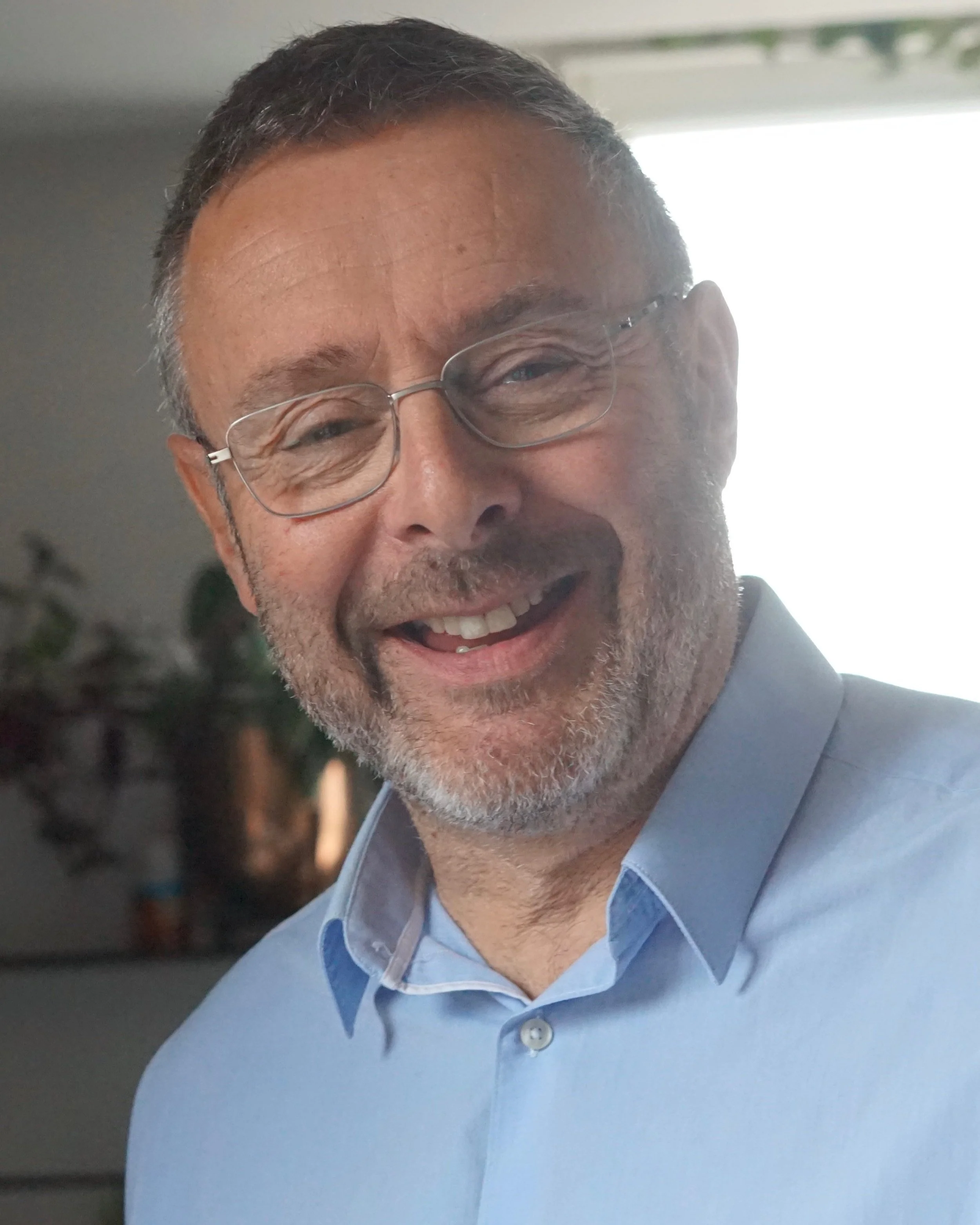
Becoming a counsellor
I chose to train at the Metanoia Institute, one of the UK’s longest-established centres for humanistic counselling and psychotherapy. Its values immediately felt right for me: respect for each person as an individual, openness and authenticity, and above all a belief in our capacity to grow and change. Those values are as important to me personally as they are to the way I work as a counsellor.
During my training, I deliberately chose quite different placements, working both in the community in West London and with forensic clients through the Atrium Prison Counselling Service. This gave me the opportunity to sit with people from very different backgrounds and life experiences, often exploring anxiety, self-esteem, loss, depression, relationships and trauma.
Some of those experiences also connected with things I had witnessed during my previous career, including working in conflict zones. Over the years, this has left me with a strong sense that, however different our circumstances may be, there are many human experiences we share. When we're in the middle of something difficult, it can be hard to see beyond it or recognise the resources we already have. Sometimes having another person alongside us, looking at things with us from a different perspective, can begin to open up possibilities that weren't visible before.
Following my training, I qualified with a BSc (Hons) and Diploma in Humanistic Counselling. I am a registered member of the BACP and work within its Ethical Framework. I continue to undertake professional development and training, both to deepen my understanding and to keep developing the way I work with clients.
Counselling young people
I have also undertaken specialist training in counselling young people aged 11–18 with No5 Young People’s Counselling Service in Reading, gaining a CPCAB Diploma in Counselling Young People.
Working with young people has become an important part of my practice. Adolescence can bring enormous change — in relationships, identity, independence and how we understand ourselves. I try to offer young people a space where they can talk openly and be taken seriously, without feeling judged or told what they ought to think or do.
Neurodiversity
I have lived experience of neurodiversity, including ADHD and autism within my family, and understand how discovering that we experience the world differently can be both challenging and liberating.
This has given me a particular interest in working with neurodivergent people and their families. I don't see neurodiversity simply as a collection of difficulties or deficits to be overcome. I'm interested in understanding how you experience the world — what works for you, what gets in the way, and what you may have learned to hide, manage or adapt in order to fit the expectations of others.
A diagnosis can sometimes provide answers, but it doesn't define the person. For me, the starting point is always the individual rather than the label.
Thinking about counselling?
If you'd like to see whether working together might feel right, I offer a free 20-minute phone or video conversation. It's an opportunity to tell me a little about what has brought you to counselling, ask any questions you may have, and get a sense of whether I might be the right counsellor for you.